
The Indian Premier League (IPL) is more than just a cricket league; it’s a fusion of sports, entertainment, and cutting-edge technology. As fans cheer for their favorite teams, a silent revolution is taking place in the background — where high-tech tools and AI-driven systems are transforming how the game is played, analyzed, and experienced. In this blog, we dive deep into the fascinating technology that powers the IPL, from ball tracking to 3D visuals and real-time decision-making.
1. Hawk-Eye Technology
- Purpose: Ball tracking, LBW decisions, and shot direction.
- How It Works: Uses multiple high-speed cameras positioned around the ground to capture the trajectory of the ball and recreate it in 3D.
- Key Feature: Generates visual replays to assist umpires in LBW decisions and helps analysts study player performance.
2. UltraEdge / Snickometer
- Purpose: Detecting edges when the ball brushes the bat.
- Technology: Uses ultra-sensitive stump microphones and sound wave analysis.
- Impact: Crucial for close decisions like caught behind, stumpings, and DRS reviews.
3. Speed Analysis (Ball & Bat)
- Purpose: Measures ball speed and bat swing speed.
- Technology: Radar guns and motion sensors.
- Interesting Fact: Fans enjoy stats like fastest delivery and bat speed during sixes.
4. Smart Stump Cameras & LED Bails
- Purpose: High-definition visuals for run-outs and stumpings.
- Technology:
- Stump Cameras: Provide unique ground-level angles.
- LED Bails: Instantly light up when dislodged.
- Advantage: Helps make accurate close-call decisions.
5. Player Tracking & Heat Maps
- Purpose: Analyze fielding patterns and player movement.
- Technology: GPS-enabled wearables and AI systems.
- Benefit: Tracks sprint distance, movement zones, and positioning.
6. AI & Data Analytics
- Purpose: Strategy building, performance tracking, and fan engagement.
- Usage:
- Match predictions
- Auction decisions
- Real-time tactical planning
- Player matchup analysis
- Tools Used: Machine learning models, cloud computing platforms like AWS, Azure, and SAP.
7. Augmented Reality & 3D Visuals
- Purpose: Better visual storytelling for viewers.
- Technology: Real-time AR graphics through broadcast software.
- Examples: Ball trajectory lines, virtual field placements, and player comparisons.
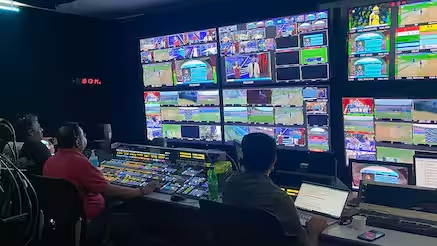
8. Broadcast & Streaming Technology
- Purpose: Live streaming and television broadcast with minimal delay.
- Tech Stack: 4K cameras, drones, cloud processing, and smart production systems.
- Key Features: AI-generated highlights, multilingual commentary, and multiple viewing angles.
Conclusion
Technology has become the hidden MVP of the IPL. From helping umpires make accurate decisions to giving fans immersive visuals and advanced statistics, it is revolutionizing cricket in every possible way. The future of IPL lies in continuous innovation, making every season smarter, faster, and more exciting.